
 4.9 Stars | 490+ Reviews
How Hard Water in Sugar Land Damages Your Water Heater
Need Reliable Plumbing Solutions? Get Expert Tips Now!

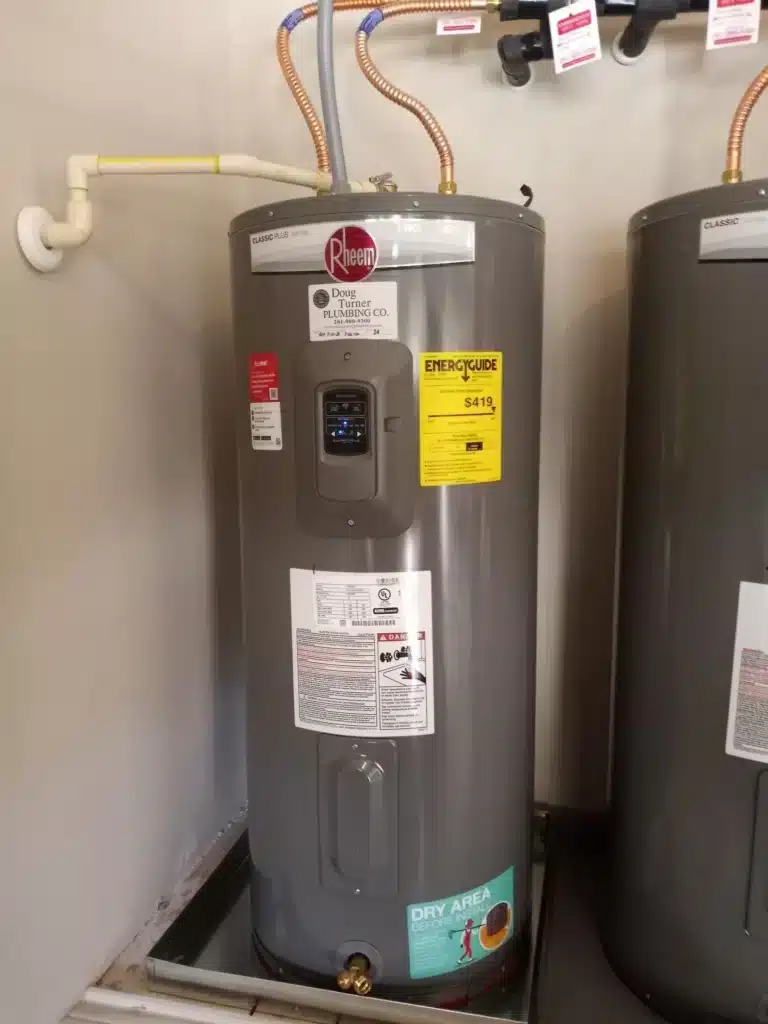
If you’ve lived in the Sugar Land area for any length of time, you’ve probably noticed the signs of hard water: the chalky buildup around your faucets, the filmy residue on your shower doors, the soap that never quite lathers the way it should. It’s one of those things people learn to live with, but what most homeowners don’t realize is that the same mineral-heavy water running through your fixtures is also quietly working against your water heater every single day.
At Doug Turner Plumbing CO., we see the effects of hard water damage on water heaters regularly. And in most cases, the homeowners had no idea it was happening until something went wrong.
What Makes Sugar Land’s Water So Hard
Hard water gets its name from the dissolved minerals it carries, primarily calcium and magnesium. The Fort Bend County area draws its water from both surface water and groundwater sources, and both tend to carry elevated mineral content. According to data from local water utilities, Sugar Land’s water hardness typically falls in the range of 150 to 200+ parts per million, which puts it firmly in the “hard” to “very hard” category by most measurement standards.
That mineral load doesn’t just pass through your pipes harmlessly. It builds up, and your water heater is where it accumulates the fastest.
What Happens Inside Your Tank
When hard water gets heated, the dissolved minerals precipitate out of the water and settle at the bottom of your tank as sediment. This is a chemistry inevitability, not a fluke. The hotter the water, the faster it happens.
Over time, that sediment layer grows. And once it’s sitting between your burner and the water it’s supposed to heat, here’s what starts going wrong:
- Your energy bills go up. The sediment acts as insulation in the worst possible sense. Your burner has to work harder and run longer to heat the same amount of water, which shows up directly on your gas or electric bill.
- You get less hot water. As sediment occupies more of the tank’s floor, your effective capacity shrinks. You might notice you’re running out of hot water faster than you used to, especially with morning showers or back-to-back laundry loads.
- The tank itself takes a beating. When sediment traps water against the tank floor and the burner cycles on and off repeatedly, it creates thermal stress on the tank lining. Over time, this contributes to corrosion and can lead to small cracks or pinhole leaks. This is one of the more common reasons we’re called out for Sugar Land leak detection and repair on systems that are only 7 or 8 years old — they’ve aged faster than they should have.
- You’ll hear it. That rumbling or popping sound coming from your water heater isn’t something to ignore. It’s the sound of water bubbling up through sediment as the burner fires. It means the buildup has gotten significant enough that your system is visibly struggling.
- Your water heater’s lifespan shortens. A well-maintained water heater in a soft water area can easily last 12 to 15 years. In areas with hard water and without any mitigation, it’s not unusual to see units fail at 7 or 8 years. That’s thousands of dollars in early replacement costs that many homeowners don’t anticipate.
What You Can Actually Do About It
The good news is that hard water damage to your water heater isn’t inevitable. There are practical steps that make a real difference.
- Flush your tank annually. Draining and flushing your water heater once a year removes sediment before it has a chance to harden into a dense layer. This is one of the most straightforward maintenance tasks for extending your unit’s life. If you’ve never had it done, it’s worth scheduling sooner rather than later, especially if you’ve been in your home for a few years.
- Check the anode rod. Your water heater has a sacrificial anode rod inside the tank that’s designed to corrode so the tank doesn’t. Hard water accelerates the rod’s degradation. Having it inspected and replaced when needed is an inexpensive way to protect a much more costly piece of equipment.
- Consider a water softener. A Sugar Land whole-house water treatment system addresses the problem at the source. By reducing the mineral content before it reaches your water heater and everything else in your home, you slow sediment accumulation significantly. You’ll also notice improvements in how your appliances perform, how long your fixtures last, and how your skin and hair feel after a shower.
- Think about going tankless. Tankless water heaters in Sugar Land heat water on demand rather than storing it, which means there’s no tank bottom for sediment to pile up on. They’re not immune to hard water effects (scale can still build up in the heat exchanger), but they tend to handle it better than traditional tank units and last considerably longer. For Sugar Land homeowners already looking at a replacement, it’s a worthwhile option to consider.
When to Call a Plumber
If your water heater is making noise, your hot water is running out faster than it used to, or your energy bills have climbed without an obvious explanation, it’s worth having someone take a look. Here’s a quick checklist of warning signs that shouldn’t wait:
- Rumbling, popping, or banging sounds from the tank
- Running out of hot water faster than usual
- Unexplained increases in your gas or electric bill
- Rusty or discolored hot water
- Visible corrosion or moisture around the base of the unit
Sometimes what looks like a failing unit just needs a flush and a new anode rod. Other times, the damage has progressed far enough that repair is the right call, or replacement is the more practical and cost-effective option long-term.
The worst approach is to wait. A neglected water heater doesn’t just fail gradually — it can fail suddenly, and in some cases, leak enough water to cause serious damage to your home.
If you’re not sure where your system stands, contact Doug Turner Plumbing CO. to schedule an assessment. We’ll give you a straight answer about what’s going on and what makes sense for your situation.
Your Trusted Plumbing And Sewer Experts
We’re your neighbors who just happen to know pipes inside and out! Whether it’s a dripping faucet or a stubborn sewer backup, the Doug Turner Plumbing CO team tackles it all with skill and a smile. We bring decades of expertise and good old-fashioned service to communities across the region.
Here are the areas where you’ll find our trucks:
 All Service Areas